What Is Sound Healing? sound healing Benefits Backed by Research
There’s a question I get all the time at my sound baths……
"What exactly is sound healing?"
Some people walk into one of my San Diego sound baths because a friend invited them. Others are curious after seeing videos on social media. Some have been dealing with stress, anxiety, burnout, or trouble sleeping, and they're simply looking for something that helps them slow down for an hour.
No matter what brings someone through the door, I always tell them the same thing. You don't have to believe in anything for a sound bath to be a worthwhile experience. You don't have to be spiritual. You don't have to meditate perfectly. You don't have to know anything about crystal singing bowls.
All you have to do is show up exactly as you are.
So... What Is Sound Healing?
At its simplest, sound healing is the intentional use of sound to support relaxation and well-being.
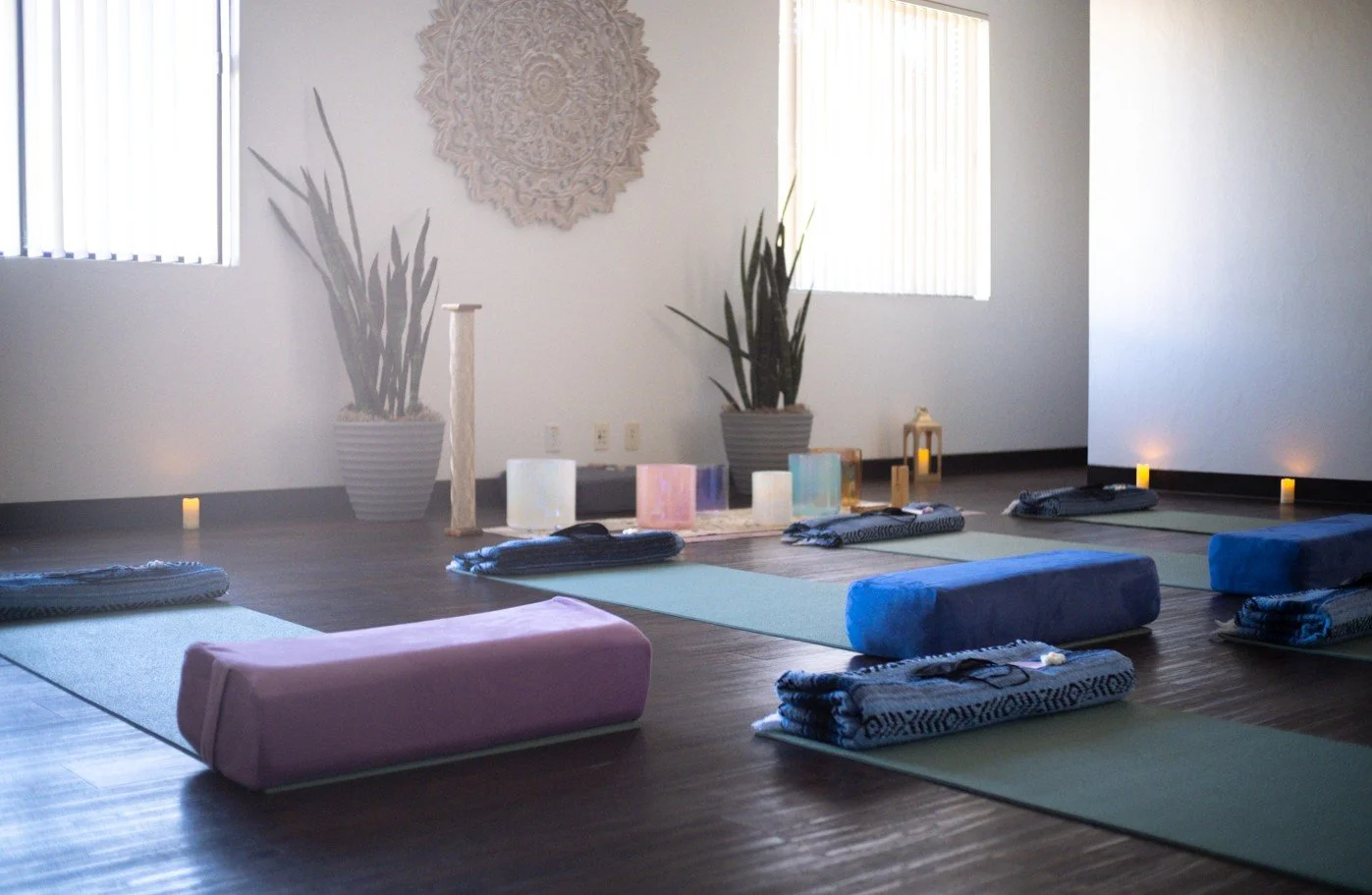
During my sound baths, I primarily play quartz crystal singing bowls, along with chimes, drums, rain instruments, and other gentle sounds that create an immersive experience. Participants usually lie comfortably on a yoga mat with blankets and pillows while allowing themselves permission to simply rest.
There isn't anything you need to "do."
No performance.
No expectations.
No pressure to quiet your mind.
In fact, if your mind wanders, that's completely normal. Mine does too.
I simply invite people to notice the sounds, notice their breath, and allow themselves an hour where they don't have to solve problems or check their phone.
Honestly, that's becoming pretty rare these days.
What I've Seen as a Sound Healing Practitioner
I've had the privilege of facilitating sound baths throughout San Diego in yoga studios, wellness spaces, nonprofit organizations, and community settings. Every group is different, but there are a few things I notice over and over again.
Someone who walks in carrying the weight of a stressful week leaves saying they finally feel like they can breathe again.
Someone who hasn't slept well in months tells me they had the best night's sleep after class.
Someone who has never been able to meditate says, "That was the first time my brain actually slowed down."
Those experiences are incredibly meaningful to me.
Of course, not everyone has the same experience. Some people feel deeply relaxed. Others become emotional. Some people simply enjoy taking an hour to disconnect from the constant noise of everyday life.
There isn't a "right" way to experience a sound bath.
What Does the Research Say?
One of the reasons I love talking about sound healing is because I also enjoy reading the research behind it.
While sound healing is still an emerging area of study, researchers have begun exploring how sound-based practices may influence stress, mood, and relaxation.
One study published in the Journal of Evidence-Based Complementary & Alternative Medicine found that participants reported reductions in tension, anger, fatigue, and depressed mood after participating in a meditation that included crystal singing bowls. Participants also experienced increases in feelings of spiritual well-being. Researchers suggested that singing bowl meditation may support relaxation and positive mood, while also noting that additional research is needed to better understand the mechanisms involved.
Other studies examining music therapy, meditation, and sound-based interventions have explored potential effects on stress reduction, nervous system regulation, anxiety, and overall well-being. While these fields aren't identical, they continue adding to our understanding of how sound may influence both the mind and body.
The important thing to remember is that research is still growing.
We don't have all the answers yet.
And that's actually one of the reasons I'm so fascinated by this work.
The Research I'm Most Excited About
If you've followed me for a while, you probably know I love learning just as much as I love teaching.
One area that has especially captured my attention is the relationship between sound, frequency, and autism spectrum disorder (ASD).
This is still an emerging field, and we have far more questions than answers. At this point, I don't think the evidence supports making broad claims about sound healing as a treatment for autism, and I think it's incredibly important that we stay grounded in what the research actually says.
That said, I believe it's a fascinating area to study.
As someone who has family members on the autism spectrum and who has spent years working in early childhood programs through my nonprofit career, this topic feels both professionally and personally meaningful to me.
I'm hopeful that future research will continue exploring how sound, vibration, sensory experiences, and nervous system regulation may support autistic individuals in ways that are evidence-based, ethical, and centered on each person's unique needs.
It's an area I'd love to contribute to someday through research of my own.
Why I Keep Offering Sound Baths
People sometimes ask me why I continue offering sound baths week after week. The answer is pretty simple. Because I watch people walk out differently than they walked in. Not because they're suddenly "fixed." Not because one sound bath magically changes someone's life.
But because for sixty minutes, they gave themselves permission to pause.
In a world that constantly asks us to produce, achieve, respond, and stay connected, choosing to rest can feel surprisingly radical.
I think we need more spaces like that.
More Than Just Relaxation
For me, sound healing has never been about escaping life. It's about reconnecting with it. It's about creating space to notice how you're feeling before rushing to the next thing. It's about remembering that your nervous system deserves care too.
Whether someone attends one of my weekly sound baths in San Diego because they're curious, overwhelmed, celebrating something, grieving something, or simply looking for a peaceful evening, my hope is always the same.
I hope they leave feeling just a little lighter than when they arrived. If that happens, then I know we've spent the evening well.
Frequently Asked Questions
Do I need meditation experience to attend a sound bath?
Not at all. Many of the people who attend my sound baths have never meditated before. There is nothing you need to do other than get comfortable and allow yourself to rest.
Are sound baths backed by research?
Research on sound healing is still developing. Some studies suggest that singing bowl meditation may support relaxation and improve mood, but more high-quality research is needed to better understand its effects and how it works.
Can sound healing cure medical conditions?
No. Sound healing should not be viewed as a cure or replacement for medical or mental health treatment. It can be used as a complementary wellness practice alongside appropriate healthcare.
What should I bring to a sound bath?
I recommend wearing comfortable clothing. Some people even come in pajamas. Bring whatever helps you feel cozy, and check the event details to see whether your venue provides mats, blankets, and bolsters.